By Near White,
Staff Writer.
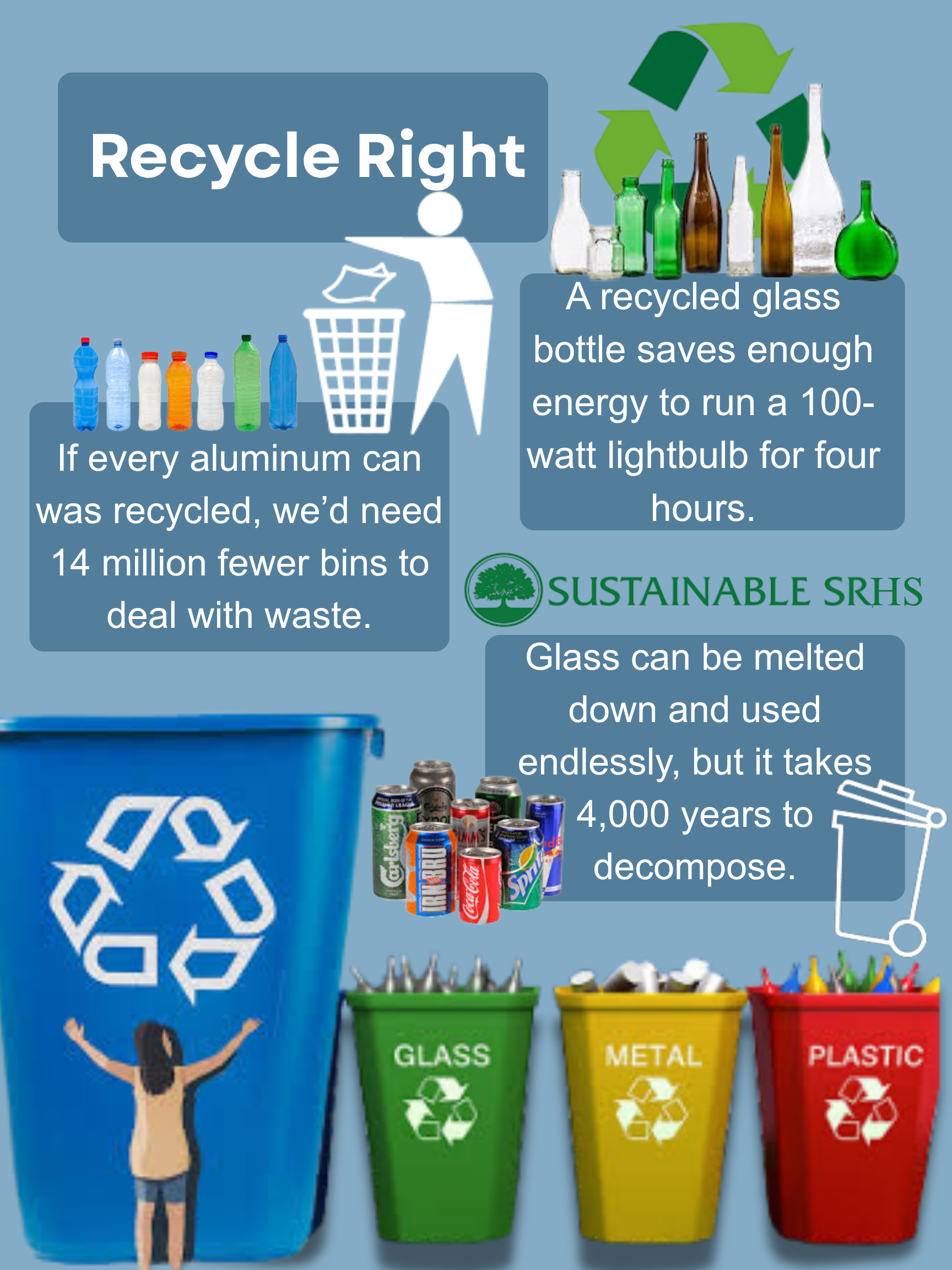
A frequent issue here on the Santa Rosa High School campus is ignorance surrounding how to properly recycle. Some toss grimy tupperware or bottles in the recycling bin, intending the best, when in reality dirty items cannot be recycled and often contaminate the other items in the bin. To properly dispose of plastic and paper waste, it’s important to do it conventionally.
There are three basic rules to follow when recycling. First of all, cans, cups, tubs, paper and cardboard can be recycled and shouldn’t be thrown into the trash. Caps and labels can stay on the surface of a plastic bottle and don’t need to be removed.
Secondly, keep food and liquid out of the recycling bin. If food waste is trapped within a recyclable object, it cannot be processed at a facility. The item doesn’t need to be spotless, though. An item would still be perfectly recyclable if it has been rinsed.
The third rule is that, contrary to popular belief, you cannot recycle soft plastics, loose plastic bags or plastic that was used to bag an item. This is because they are classified as “tanglers” that wrap around and destroy sorting machinery, resulting in costly, dangerous and time-consuming shutdowns for recycling facilities. To avoid this issue when checking out at a store, ask for a paper bag, as they can easily be recycled or reused.
Even if a bin isn’t available, there are alternative ways to reduce plastic waste. Here on campus, the fashion club hosts an event called Trashion Fashion. During Trashion Fashion, students use plastic waste and other items to create fun new outfits to showcase to the student body. “I feel like as an art piece it’s really interesting and cool, but I don’t know if it would be a practical piece of clothing,” said sophomore Macy Dix, a Trashion Fashion appreciator.
Making your own recycled clothing may not be a common recycling method, but making art out of trash could prove to be a fantastic way to keep plastic items out of oceans.
There are countless recyclable items in the world and countless ways to go about reusing what was once considered waste. Whether it’s melted down and reused at a facility or cut up and made into something new by your own hand, you’re saving the environment one piece at a time.