By: Krystof Gonzalez,
Staff Writer.
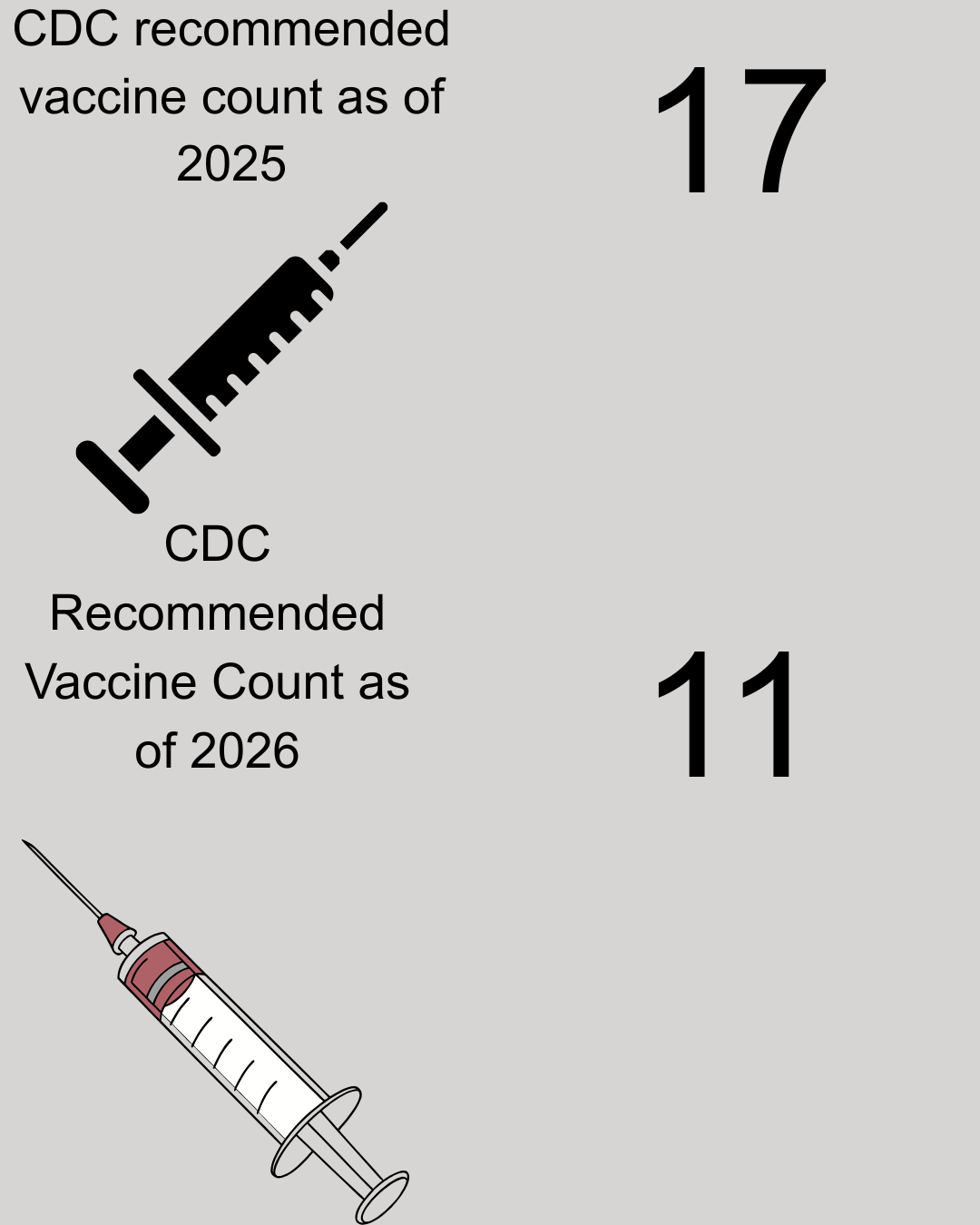
Recently, controversial changes to the Center for Disease Control’s vaccine requirements have taken place. The number of advised vaccinations by the CDC has been reduced from 17 to 11. They recommend vaccines against 11 diseases, but only under certain conditions. Many health organizations such as the American Academy of Pediatrics, American Medical Association and Infectious Diseases Society of America contest the recent changes.
The health organizations aren’t wrong to question the methods used to reach this conclusion, as it is essentially just a comparison of the USA’s procedures to those of other countries, specifically those in Europe, and then it’s chosen based on that. Sophomore Gavin Brunamonte said, “I think as a matter of public safety, it’s like wearing a seatbelt; removing the seatbelt means fatalities will rise.”
The CDC also seems to have developed three groups — instead of the former two, recommended and not recommended, which is much simpler for people to understand — focused on determining if a vaccine is effective. This has created a sense of confusion, considering the expected nature and outcomes of immunization and disease. The reason for the reduction of required vaccines is due to the poor success rates of vaccines. Compared to the mandates and vaccination policies of other countries, this doesn’t make any sense either as they are completely different countries to the U.S. culturally and have different relations with their government and simply different governments in general. Another critique is that the new guidelines don’t follow the typical model for recommendations, and was rather a predefined narrative operating on its own rules.
The aforementioned organizations recommend sticking to the previous model and schedule made in 2024 due to the uncertainty and low confidence expressed even in the current decisions. It’s likely to cause more people to be hesitant and skeptical or potentially doubt the reliability of vaccines. This could cause a rise of later complications, even when the intention was to be more “transparent.” In terms of coverage compared to recommendations, all of the old vaccines and services for the most part will be covered by various health agencies.