By Gavin Brunamonte,
Staff Writer.
When students think of school food, the first thought that comes to mind is often, “Ew, what kind of prison food is this?” Another arguably more important question is, “How nutritious is the food that is regularly served?”
In general, teenagers between 14 and 18 years old should eat around 2,100 calories over the course of the day. According to California’s Department of Education, schools are responsible for providing 750 to 850 calories, split between two meals per day. Of these 850 calories, a majority should be from protein and fiber. However, school food often doesn’t include these two vital nutrients, instead replacing them with oils and fats. “No, I think it is incredibly unhealthy and just designed to meet really specific and pointless federal and state regulations that don’t cover enough to actually insure healthy food,” said junior Elliot Henty-Clark.
The largest contributors to a healthy diet are fibers, proteins and carbs, containing a variety of nutrients that your body needs to stimulate brain and muscle development. This makes eating enough of these nutrients on a daily basis extremely important for children and teens. Although the school food contains the correct amount of calories per meal, the structure of these calories may not be healthy for growing children to eat on a regular basis.
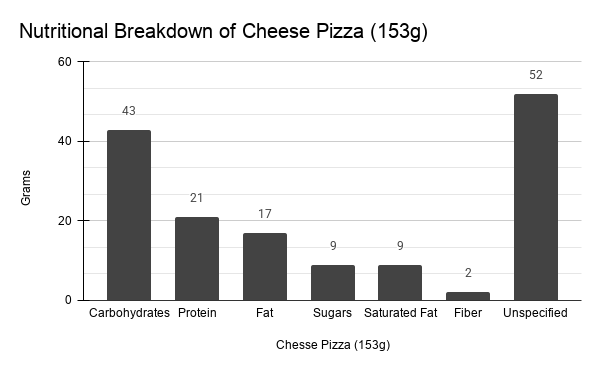
For instance, take a popular item served from the cafeteria everyday: the pizza. Though it doesn’t contain any direct hazards, it consists of mostly sugars and fats which can have negative impacts when eaten en masse. Even though this isn’t shocking — it’s literally pizza; the ingredients are mostly cheap artificial oils pressed into a triangular shape.
However good or bad the school food might be, it does meet the health requirements defined by California’s Education Department. At the end of the day, all we can really do is thank our school district for providing us with something beyond nothing.