By Reid Heavner,
Copy Editor.
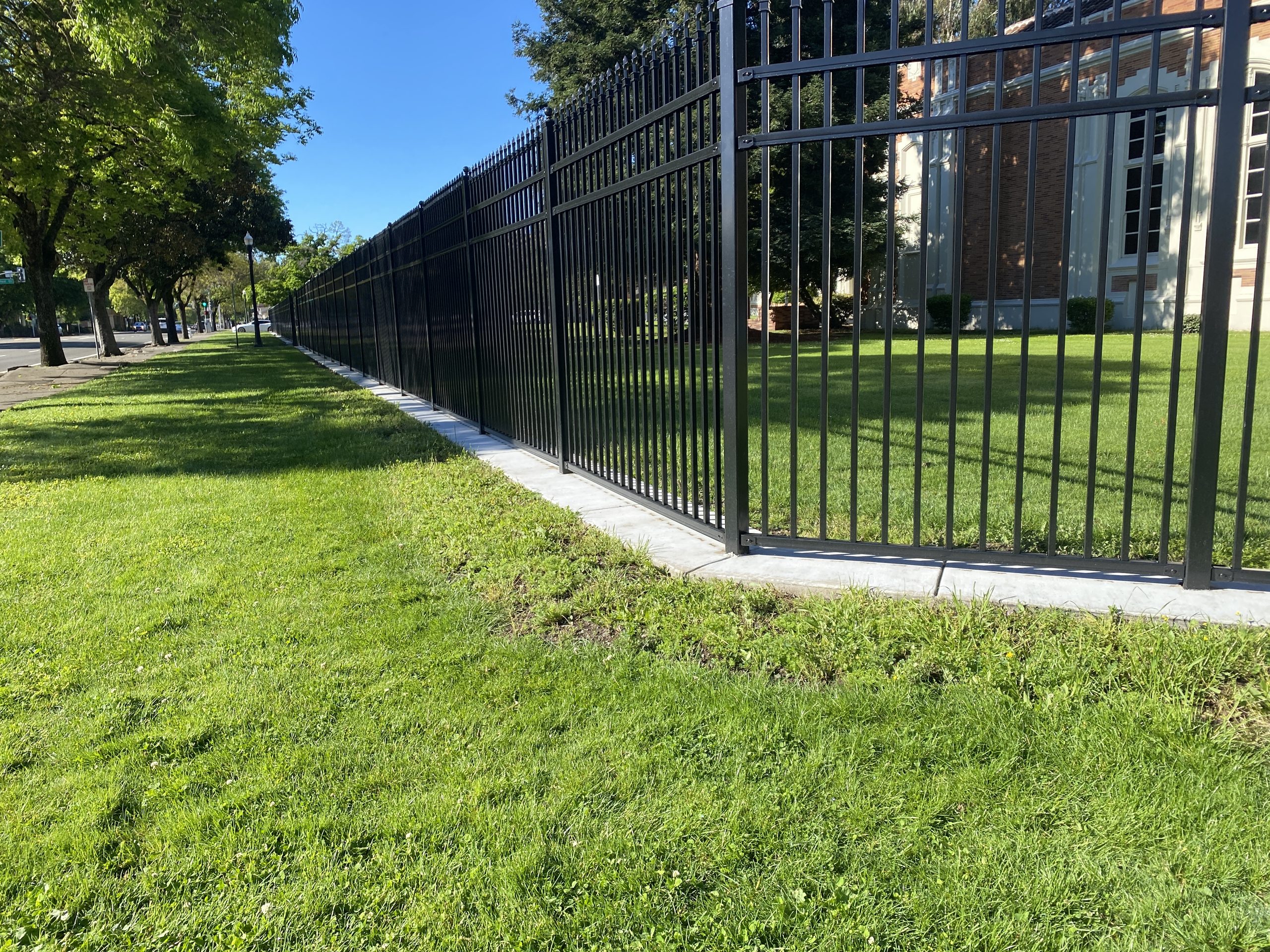
One of the most dramatic developments of the school year has been the newly built fence surrounding campus. In the latest installment, new policies were implemented to determine exactly which campus access points must be locked and when. As justification for this new policy, administrators have cited safety concerns over unknown persons coming onto campus; however, this change creates needless risk for pedestrians and cyclists.
Access points like the staff parking lot, the Ridgway swim center driveway or the baseball pedestrian path are now locked or limited to only staff use under the new policy. Students are expected to exclusively use the student parking lot, ArtQuest parking lot or front ‘U’ area. Of these three options, only the front ‘U’ is designed for pedestrian use and none of the three are easily accessible for cyclists.
This plan is inherently unsafe; the proposed campus access points are simply inadequate for pedestrian and cyclist students coming onto campus. The perceived threat of unknown persons on campus has drawn a much stronger response from administration than the more realistic threat of traffic injuries by forcing cyclists and pedestrians to use less accessible and less safe routes. An audit by Christina Panza for Sonoma County Bicycle Coalition of the active transportation options for campus seemed critical, saying the “only ‘official’ entry point for student pedestrians and/or bicyclists entering campus from Ridgway is the narrow student parking lot entrance that drivers also enter/exit. Heavy traffic at drop-off/pick-up in this location impedes sightlines both of and by active travelers.”
Although this plan does allow for administrators to watch over entrances and exits, the benefit of doing so is admittedly dubious. To be able to stop someone coming onto campus who shouldn’t be — for example, a student of another school — each supervisor would need to accurately remember the faces of 2,000 students. They would need to be attentively watching every access point for hours every day in order for these changes to make a real difference to campus security.
If improving campus safety is truly the primary objective, then these changes are entirely misguided. They fail to provide meaningful safety improvements while forcing pedestrians and cyclists to use routes not designed to accommodate them. These campus ‘improvements’ represent an appeal to PR over genuine safety concerns.