By Jonah Wurtzel,
Staff Writer.
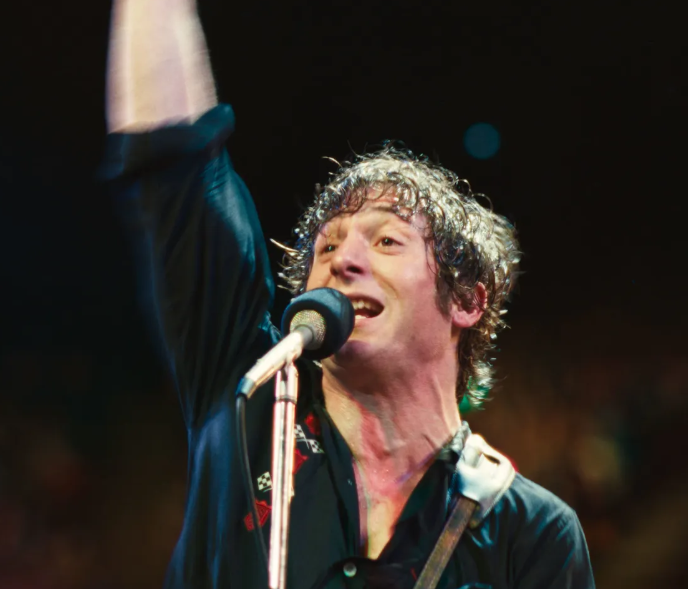
“Where you come from is gone, where you thought you were going to never was there and where you are is no good unless you can get away from it,” said manager Jon Landau (Jeremy Strong) to legendary rockstar Bruce Springsteen (Jeremy Allen White), during a dark moment towards the end of Scott Cooper’s Bruce Springsteen biopic, “Springsteen: Deliver Me From Nowhere.” The quote, originating from Southern Gothic writer Flannery O’Connor, whose bleak and grotesque works of fiction inspired his 1982 album Nebraska’s somber and unsentimental lyricism, is aptly chosen. The film is a moody character study revolving around a confused and conflicted Springsteen’s personal and professional tribulations during the recording of his 1982 album Nebraska, as well as the traumatic childhood experiences that he channeled into the celebrated record. As the words imply, much of the movie revolves around Springsteen grappling with his newfound stardom and troubled past.
Throughout the film, White’s subtly pained delivery of dialogue and fearfully unsure countenance makes for an exceptional leading performance. From reunions with his alcoholic father to moments of fleeting and timid joy within his relationship with girlfriend Faye Romano (Odessa Young), the star known for “The Bear” and “Shameless” brings a consistently subtle yet deeply moving vulnerability to the role. Young also delivers a strong performance as a love interest both enchanted by Springsteen and constantly tortured by his anxious inability to attach himself to her.
Unfortunately, Cooper’s screenplay often fails to do the film’s superb acting justice. “Springsteen” is all too often plagued by the same cliches that condemn most biopics to mediocrity. From overdramatic one-take songwriting sessions, black-and-white flashback scenes and even a battle with the record label over artistic experimentation (one trope I wouldn’t mind never seeing again), the film provides a disappointing number of eye roll-worthy moments. Furthermore, much of the dialogue feels obnoxiously contrived and unrealistic, such as Springsteen’s expressed attempts to “find something real in all the noise” and answer of “that makes one of us” when a fan yells to him from a car window, “I know who you are.”
Additionally, the film’s attempt to escape the typically sweeping and epic arc of a biopic and instead focus on a specific point in Springsteen’s career—a concept exciting in theory—largely falls flat. Junior Lena Meline noted an unfortunate tendency of filmmakers to “glorify artists’ life struggles rather than treating them with deference” in regards to biopics. However, Springsteen fails in its own unique way, largely doing neither. The pacing leaves much to be desired, as the plot simply meanders from scene after scene of gradually less interesting malaise and angst until its anticlimactic conclusion. The sequencing feels more slapped-together than deliberate, and leaves the viewer with the perception of an unfinished work. Unfortunately, Springsteen’s star power and incredible soundtrack fail to save it from being much more than a tedious slog through an exceptional artist’s struggles.