By Laurel Merrick,
Staff Writer,
Editor-in-Chief.
When the district announced the consolidation of Santa Rosa High School and Santa Rosa Middle School, it was met with overwhelmingly negative reactions from both staff and students. The frustration came from the high school students who didn’t want to share their school with preteens and from staff who were forced to be rehomed after years of being in the same classroom. The larger educational community was frustrated that the middle school was placed in the more modern DeSoto Hall, forcing teachers who had been there since its very construction back to the Main Building with its rat infestations and poor climate control. It was easy to be unequivocally frustrated upon seeing each change upon change to our already begrudgingly accepted system.
However, a couple of blocks away, SRMS was dealing with their own frustrations. Everyone remembers their own shift from middle school to high school. The halls seem to double in size, the gym is no longer an easy building to find but instead could only be accessed if you went down the right path and chose the right door. Middle school is meant to be an adjustment period to prepare you for this jump. However, these middle schoolers are being forced to undergo this change two years early, with their adjustment period revoked and the jump becoming elementary to high school.
There’s also the matter of the actual schooling. In middle school, grades do not matter. You can move onto ninth grade with straight F’s. You are not required to try, there is no reward nor punishment. But when you go into high school, you are being thrown onto a brand new campus where you are suddenly the bottom of the food chain, with new people, new teachers and new expectations. And suddenly, everything matters. Suddenly, you start hearing the murmurs of summer school and threats of never walking across the stage.
But for these kids, they don’t have that. There is no shock factor, there is no big jump. The only thing that is shifting is the access to slightly more of the SRHS campus and a more attractive phone policy.
Not only that, but despite promises of strict segregation, the measures taken to stop intermingling has been very underwhelming. “My worry is that people who are looking for a good role model might find a bad one and use that as a permission to engage in that kind of behavior,” commented SRMS English and history teacher George Peterson. Despite the 15 minute difference between the schools’ start times, middle schoolers still mingle with high schoolers in the mornings before their school starts whilst loitering outside DeSoto, locker rooms overlap and seventh and eighth graders wander around campus once their school is out.
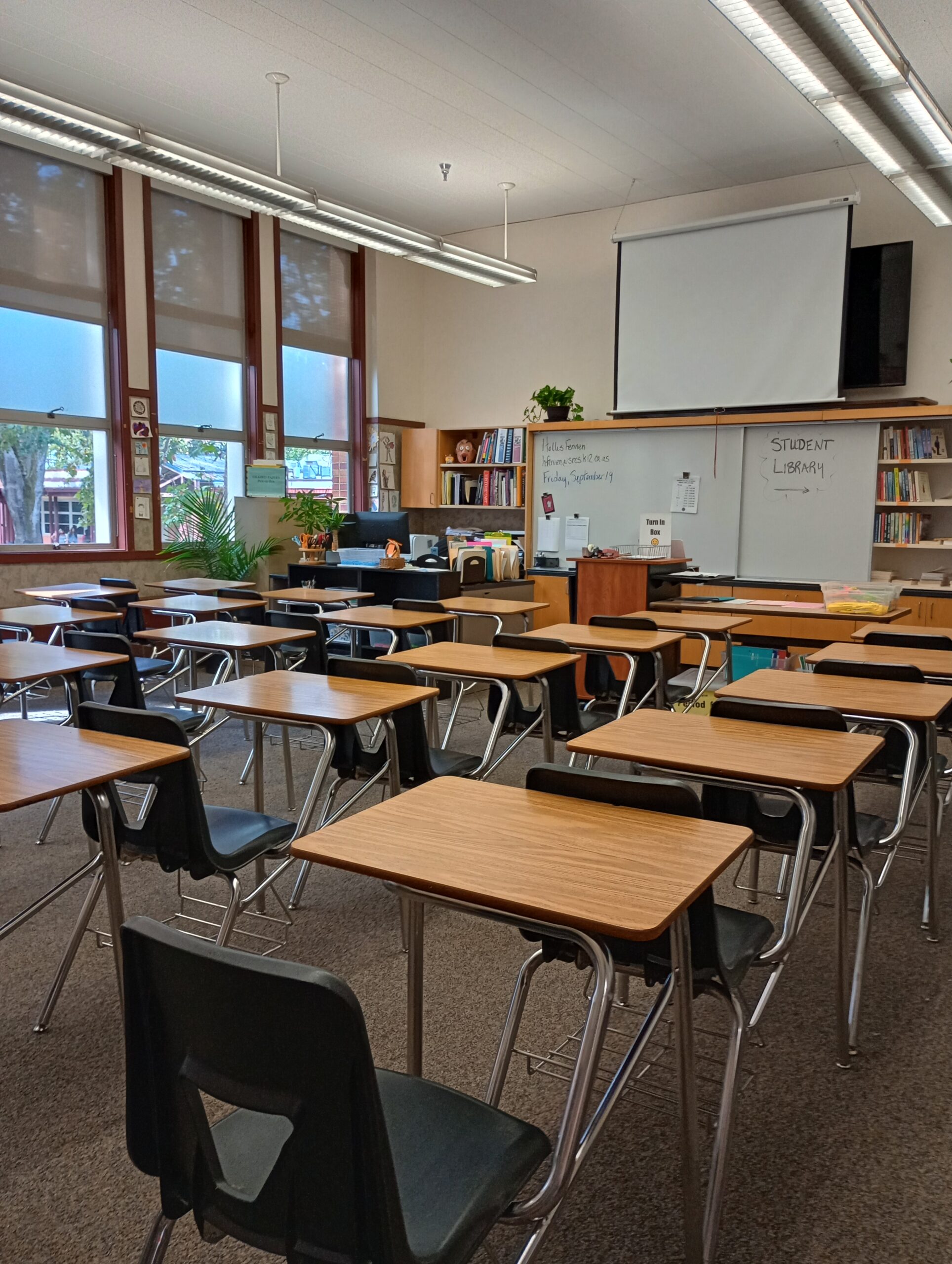
And it wasn’t just the students struggling with negative reparations of the move, 24 teachers moved out of the prized DeSoto and in moved every single SRMS teacher. Not only were they forced out of their buildings, as our DeSoto teachers can empathize with, they were forced off their entire campus. “I feel bad for the previous teachers that had to move, I feel bad for coworkers that had to move, but instead of feeling sorry for ourselves, I think it’s good to think about the [positives] that can [come] from this. What’s done is done, now it’s a question of what we can do now to make it the best outcome,” explained Peterson, putting a positive spin on a difficult situation.
Of course, the move wasn’t easy. “I spent two weeks after school working in my classroom in DeSoto every day packing and moving,” explained SRHS veteran English teacher Hollis Fennen. “I spent two weeks before school started cleaning, fixing and moving into this classroom. It took me a month of my summer to relocate. They paid me for 18 hours and it took me four weeks.” Spending that much time over summer, a time meant to be a break from school after a tedious year, affects a teacher’s ability to be rejuvenated for the start of the year, as Fennen explained.
That said, the move has only resulted in the department growing more tightknit. “The thing I valued the most during the consolidation was the unity and collaboration in the department. We were so supportive of each other. We were the only department where 100% of us had to relocate. That definitely had an effect on us but we were able to share that together and support each other and cheer each other on and offer support and I really valued that,” said Fennen.
However, the effort to accommodate and make the situation as comfortable as possible is still being made. Peterson explained, “Everyone is trying, and to me that’s the most important thing.”